
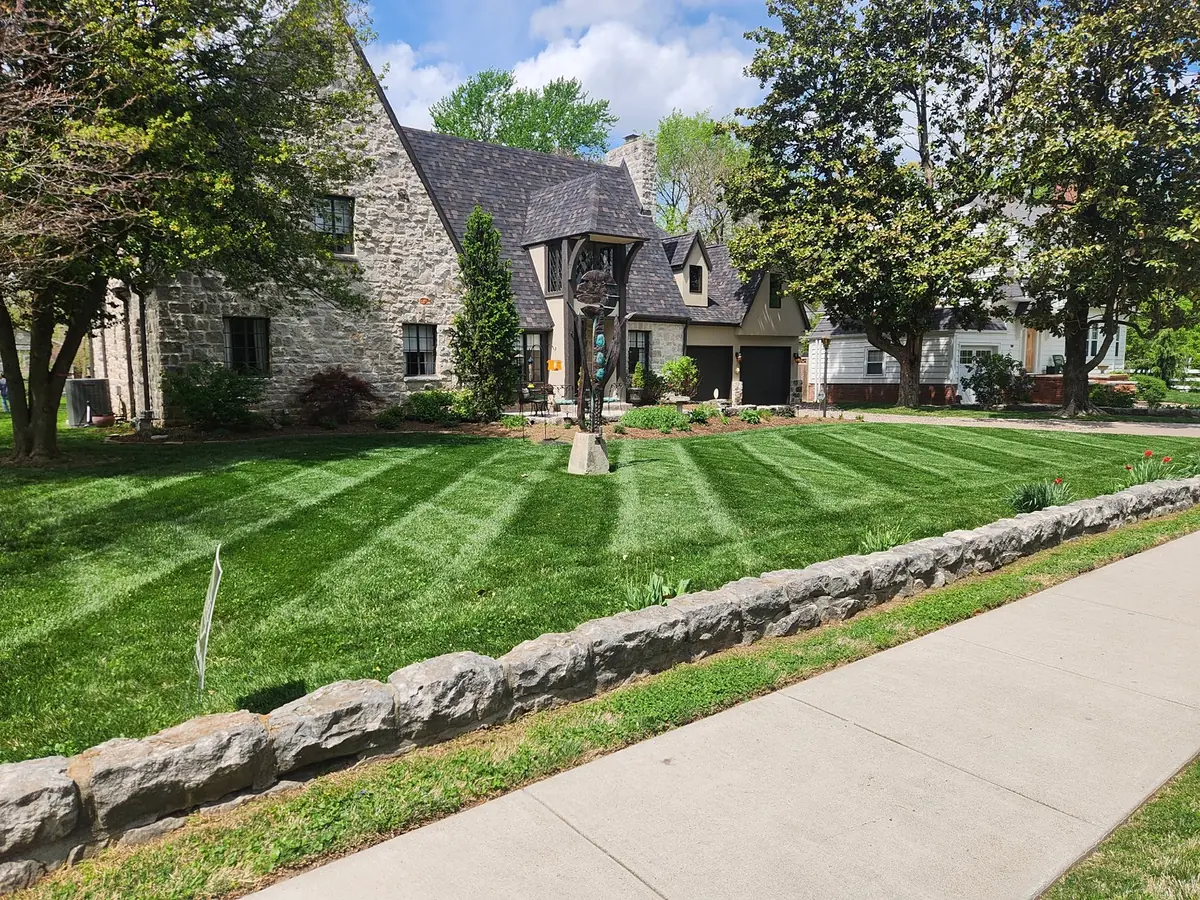
Late October is when many homeowners start asking when to stop mowing in Springfield, Missouri. The honest answer is that the lawn decides. Tall fescue may keep growing through cool fall weather, while zoysia and Bermuda usually slow down and turn dormant sooner.
That difference matters across Springfield, Nixa, Ozark, Republic, Rogersville and the rest of Southwest Missouri. The Ozarks sit in the turf transition zone, where cool-season and warm-season grasses share the same neighborhoods but need different final mowing heights. A good winter lawn-preparation plan starts by identifying the grass and watching its actual growth.
When Should You Stop Mowing in Springfield, MO?
Continue mowing while the grass is still adding noticeable height. University of Missouri Extension advises mowing cool-season lawns at their regular height through October and November until growth stops. That is more dependable than choosing the final fall mow by the first frost date alone.
For many Springfield-area properties, the last mowing falls sometime from late October into November. A warm stretch can keep tall fescue moving after an early frost, while colder nights may send a warm-season lawn dormant sooner. If the lawn has not grown enough to justify another cut, there is no benefit in mowing simply because another week has passed.
Choose a dry window for the final visit. The grass blades should be dry, the soil should be firm enough to support equipment and any visible frost should be gone. A first frost does not automatically close the mowing season; measurable growth and safe ground conditions are the better signals.
The Best Final Mowing Height for Ozarks Lawns
Final mowing height is not one number for every lawn. Cutting too low removes useful leaf tissue and can scalp uneven ground. Leaving grass far outside its normal range can also create a messy, matted surface. Stay within the seasonal range for the turf that is actually growing on the property.
Tall Fescue: 2.5 to 3.5 Inches in Fall
MU Extension lists a fall mowing range of 2.5 to 3.5 inches for tall fescue. For many established Springfield lawns, finishing around 3 to 3.5 inches keeps the turf within that range without turning the final visit into a sudden scalp.
There is no need to force healthy fescue down to the lowest possible setting before winter. Shade, slope, turf density and the height used during the rest of the season can influence the right finish. For a fuller comparison of local grasses, read the guide to the best mowing height for Southwest Missouri lawns.
Zoysia and Bermuda: Leave 2 to 2.5 Inches in Fall
Warm-season zoysia and Bermuda should be left taller in fall—about 2 to 2.5 inches under MU Extension guidance. Their brown winter color is a normal sign of dormancy, not a reason to cut the turf down again.
The low cleanup cut sometimes used on warm-season lawns belongs in spring before green-up, not at the start of winter. Scalping dormant zoysia or Bermuda in late fall removes the protective canopy at the wrong point in the growth cycle.
Follow the One-Third Rule on the Final Cuts
The final mow before winter does not cancel the one-third rule. Avoid removing more than about one-third of the grass blade in one visit. A drastic deck drop can leave clumps, expose pale lower growth and put unnecessary stress on the turf just as recovery is slowing.
If tall fescue has reached well beyond the target height, bring it down over separate mowings as growth and weather allow. The goal is a controlled seasonal finish, not one aggressive cut that tries to correct several missed visits at once.
Never Force a Cut on Frosted, Wet or Saturated Turf
A cold morning does not mean the mower needs to run immediately. Wait until visible frost has melted and the grass surface has dried. If the ground is soft after rain, tire tracks and mower turns can leave damage that lasts longer than the benefit of one additional cut.
Wet grass also tends to bend, clump and cut unevenly. When late-fall weather closes the normal route window, waiting for better conditions can produce a cleaner result than forcing the schedule. The same principle is explained in the guide to mowing wet grass in Springfield.
Mulch Light Leaf Cover and Remove Heavy Buildup
Leaves are part of the final-mowing decision. A light, dry scattering can often be chopped into small pieces and distributed back into the turf. The pieces should fall between the grass blades instead of collecting in thick rows or clumps.
When leaves completely hide the grass, stay wet or pack into low areas, removal is the cleaner option. MU Extension warns that packed leaves can smother cool-season turf. Heavy buildup also makes it difficult to see obstacles, judge mowing height and leave an even finish.
Fine Edge can review mowing and cleanup as separate parts of the same seasonal visit when timing and route availability allow. See the leaf removal service in Springfield, MO and the broader Springfield yard cleanup guide for scope and planning details.
Why a Sharp Mower Blade Matters in Late Fall
A sharp blade cuts the grass cleanly. A dull blade tears it, leaving pale or frayed tips that make a freshly mowed lawn look brown. MU Extension also recommends mowing dry grass with a properly sharpened blade so clippings spread more evenly.
There is no useful one-size-fits-all sharpening interval. Sandy soil, hidden sticks, heavy leaf work and the number of properties mowed all affect blade wear. The practical check is the cut itself: if tips look shredded instead of cleanly sliced, the blade needs attention.
What Should a Final Fall Mowing Visit Include?
A complete last cut is more than lowering the mower deck and making one fast pass. The agreed visit may include mowing at the correct height, trimming accessible areas, defining quoted hard edges, clearing loose clippings from walks and drives, and handling leaves according to the cleanup plan.
Property details still matter late in the season. Gates, slopes, wet areas, exposed irrigation parts, pets and hidden objects should be identified before equipment enters the yard. For recurring and one-time availability, review the Springfield lawn mowing service page or send the address and current photos.
End-of-Season Lawn Preparation Checklist
- Watch growth: Keep mowing at the proper height until measurable growth stops.
- Identify the turf: Use 2.5 to 3.5 inches for fall tall fescue and 2 to 2.5 inches for fall zoysia or Bermuda.
- Protect the crown: Do not scalp the lawn or make a drastic last-minute deck change.
- Follow the one-third rule: Step an overgrown lawn down over more than one visit when needed.
- Wait for a dry window: Avoid visible frost, wet blades and saturated ground.
- Manage leaves: Mulch a light, dry layer; remove heavy, wet or matted buildup.
- Inspect the finish: Ragged brown tips are a sign the mower blade needs attention.
- Confirm the scope: Know whether the quote includes mowing, trimming, edging, leaf work and material handling.
Final Fall Mowing Questions From Springfield Homeowners
When is the last lawn mowing of the year in Springfield?
There is no fixed date. Many final visits happen from late October into November, but tall fescue should continue to be mowed at its regular fall height until noticeable growth stops and conditions are dry enough for a clean visit.
Should tall fescue be cut shorter before winter?
Keep it within the recommended fall range of 2.5 to 3.5 inches. Around 3 to 3.5 inches is a practical target for many established local lawns, but the final cut should not remove more than one-third of the blade or scalp uneven areas.
Should zoysia or Bermuda be scalped before winter?
No. MU Extension recommends leaving warm-season lawns around 2 to 2.5 inches in fall. The lower cleanup cut belongs in spring before green-up, when dead top growth can be removed as the lawn begins a new season.
Can I mow after the first frost?
A first frost does not always end the season, especially for cool-season fescue. If growth continues, wait until the frost is gone, the grass is dry and the soil is firm before deciding whether another cut is needed.
Should fall leaves be mulched or removed?
Mulch a light, dry scattering when the mower can reduce it into small pieces without leaving clumps. Remove leaves when they are deep, wet, matted or covering the turf so completely that the grass and obstacles cannot be seen.
Can Fine Edge combine a final mow with leaf cleanup?
Yes, when property conditions, the requested scope and route availability line up. Send the address, current photos, leaf coverage and areas to include so Matt can review whether one seasonal visit or a staged plan makes more sense.