
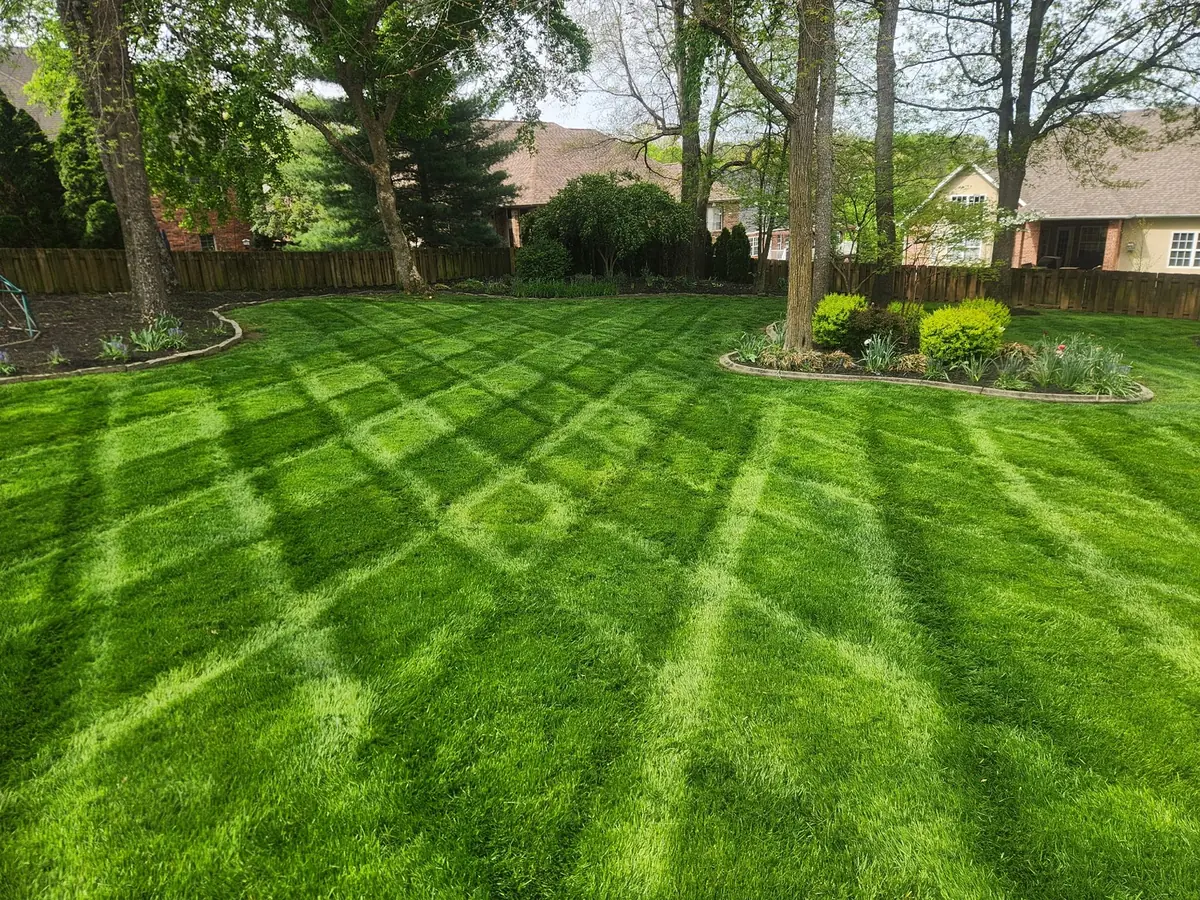
A close cut can look tidy for a day, but mowing too low for the turf type can expose stems, exaggerate thin areas and reduce the leaf surface the plant uses to recover. Springfield-area lawns can contain cool-season turf such as tall fescue, warm-season turf such as zoysia, or a mix that does not respond well to one universal setting.
Recommended mowing height at a glance
- Tall fescue: generally 3 to 4 inches.
- Zoysia: generally 1½ to 2½ inches during active growth.
- Late-season zoysia: raise the height toward 2 to 2½ inches by September.
These University of Missouri ranges are useful starting points, not a promise that one setting fits every lawn. Cultivar, ground shape, mower type, shade, current health and the amount of growth since the last visit still matter.
Tall fescue is generally maintained higher
University of Missouri guidance places tall fescue toward the higher end of common lawn mowing ranges. A taller canopy helps shade the soil and gives a cool-season lawn more leaf area during heat and dry periods. The exact setting still depends on the cultivar, season, current condition and customer goals.
For many tall-fescue lawns, repeatedly chasing an extra-short appearance creates more stress than value. A mower should be set from the actual blade height on a flat surface, not from an unverified number on the adjustment lever.
Zoysia can be maintained lower—but not carelessly
Zoysia is a warm-season grass with a denser growth habit and a lower recommended range than tall fescue. That does not mean every zoysia lawn should be cut at the bottom of the range. Uneven ground, thatch, mower type, heat and missed visits can all change the appropriate approach.
A low setting on an uneven property can scalp high points even when the average height seems correct. The finished result should be judged across the whole yard, not by one number.
Follow the one-third rule when possible
A practical guideline is to avoid removing more than about one-third of the green leaf at one time. If tall fescue is being maintained higher, it should be mowed before the lawn becomes so tall that returning to the target requires a severe cut. The same principle applies to zoysia even though its preferred range is lower.
When a visit is missed, raising the deck and stepping the height down over later mowing visits is usually better than scalping the lawn in one pass.
Season and stress matter
Spring and fall
Cool-season turf often grows actively during moderate spring and fall weather. Mowing frequency may need to increase so each cut remains moderate.
Summer
Tall fescue can be stressed by heat and dry conditions. Avoiding an unnecessarily low cut can help preserve leaf area and shade at the soil surface. Zoysia is active in warm weather, but its growth rate still depends on moisture and current health.
Shade and uneven areas
Shaded turf may be thinner and less tolerant of aggressive cutting. Slopes and bumps create scalping risk. A good mowing plan responds to those parts of the property instead of treating every square foot alike.
How to tell if a lawn is being cut too low
- Yellow or tan stems appear immediately after mowing.
- High spots show pale or bare scalped patches.
- The lawn loses color quickly in hot weather.
- Thin shaded areas become more visible after every cut.
- A large share of the leaf blade is removed each visit.
Identify the turf before choosing the setting
If the grass type is unknown or mixed, avoid making a dramatic height change based on a chart alone. Observe the blade, growth habit and seasonal color, and use Missouri turf guidance when identifying the lawn. Fine Edge Mowing adjusts the mowing approach to the quoted property and current conditions rather than advertising one number for every yard.
For broader seasonal advice, read the Springfield lawn care guide or request local lawn mowing service.
Helpful sources: MU Extension’s cool-season lawn calendar and proper mowing guidance.